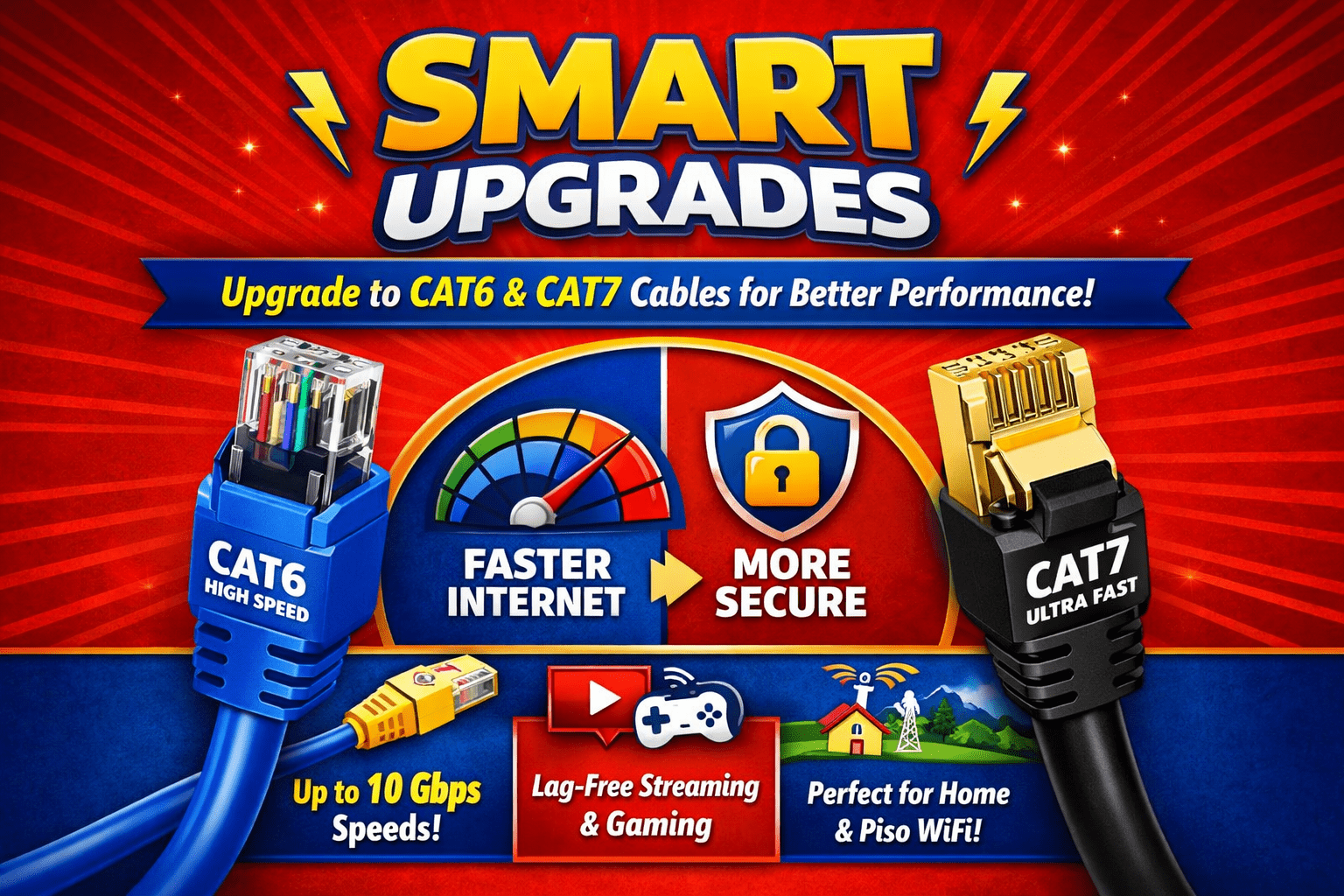
Smart Upgrades: Using CAT6/CAT7 Cables for Better Performance.
When people think about improving internet speed, they often focus on routers, mesh systems, or upgrading their service plan. But one of the simplest and most effective improvements is easy to overlook: the cable itself. Choosing the right Ethernet cable can make a noticeable difference in stability, speed, and overall network performance.
If your home or office network feels sluggish, inconsistent, or unable to keep up with modern demands, it may be time to consider CAT6/CAT7 cables. These cables are designed to support faster data transfer, reduce interference, and provide a more reliable connection for everyday use and demanding applications alike.
Why Ethernet Cables Still Matter
Wireless networks are convenient, but they are not always the best solution for performance. Walls, distance, interference, and network congestion can all affect Wi-Fi quality. Ethernet cables provide a direct wired connection, which usually means:
- Lower latency
- More stable speeds
- Less signal interference
- Better performance for large file transfers
- More reliable gaming and streaming
A high-quality cable can help your network hardware perform closer to its full potential.
What Makes CAT6 and CAT7 Different?
CAT6 and CAT7 are both advanced twisted-pair Ethernet cables, but they offer different capabilities.
CAT6 cables
CAT6 cables are a strong choice for most homes and small offices. They support:
- Speeds up to 1 Gbps over longer distances
- Up to 10 Gbps over shorter distances
- Reduced crosstalk compared to older cable categories
- Reliable performance for streaming, remote work, and gaming
For many users, CAT6 is more than enough for current needs and future upgrades.
CAT7 cables
CAT7 cables are built for even better shielding and performance. They are designed to reduce interference further and can support very high-speed networking in demanding environments.
Key benefits include:
- Stronger shielding against noise and interference
- Excellent performance in environments with many connected devices
- High bandwidth support for data-heavy tasks
- A good option for network setups where stability is critical
While CAT7 is often more than enough for home use, it can be helpful in offices, studios, or other environments where network reliability is essential.
Benefits of Upgrading to CAT6/CAT7 Cables
Switching to CAT6/CAT7 cables can improve your network in several practical ways.
1. Better speed consistency
A faster internet plan is only useful if your network can handle it. Older cables may bottleneck performance, especially if you are working with high-bandwidth activities. Upgraded cables help keep speeds more consistent across devices.
2. Reduced interference
Electromagnetic interference can affect network quality. This is especially true in places with many electronics, power cables, or wireless signals. CAT7 cables, with their added shielding, are especially helpful in these situations.
3. Improved reliability
Dropped connections, lag, and random slowdowns can be frustrating. A better Ethernet cable creates a more dependable connection, which is especially important for video calls, online gaming, and business operations.
4. Future-ready networking
Even if your current internet plan does not require top-tier cable performance, upgrading now can save trouble later. As internet speeds increase and devices demand more bandwidth, a strong cable foundation helps your setup stay ready.
Where CAT6/CAT7 Cables Make the Biggest Difference
Not every setup needs the same level of cable performance. Here are some situations where upgrading is especially worthwhile:
- Gaming setups: Lower latency and fewer interruptions
- Home offices: More stable video conferencing and cloud access
- Media streaming: Smoother playback for high-resolution video
- Small businesses: Better support for multiple devices and network traffic
- Smart homes: Reliable connections for hubs, cameras, and connected devices
If your network handles a lot of activity, cable quality becomes more important.
How to Choose the Right Cable
Before buying a cable, it helps to consider your environment and performance needs.
Think about your use case
If you need a solid, affordable upgrade for everyday use, CAT6 is often the best choice. If your setup has more interference or higher performance demands, CAT7 may be worth the extra investment.
Check cable length
Longer cables can experience more signal loss, so buy only what you need. Keeping cable runs reasonable helps preserve performance and reduce clutter.
Look for quality construction
A cable’s category matters, but so does its build quality. Look for durable connectors, sturdy jackets, and proper shielding where needed.
Match the cable to your hardware
To get the most out of your upgrade, your router, switch, modem, and devices should also support the speeds you want. A better cable cannot fix outdated hardware, but it can help eliminate one major weak point.
Simple Upgrade, Strong Results
Upgrading to CAT6/CAT7 cables is a straightforward way to improve network performance without making your setup more complicated. It is a practical step that can boost speed consistency, reduce interference, and create a more dependable wired connection.
For many users, the difference is immediate. A better cable may not be the flashiest upgrade, but it is one of the smartest. If you want a more stable and efficient network, start with the connection that ties everything together.