
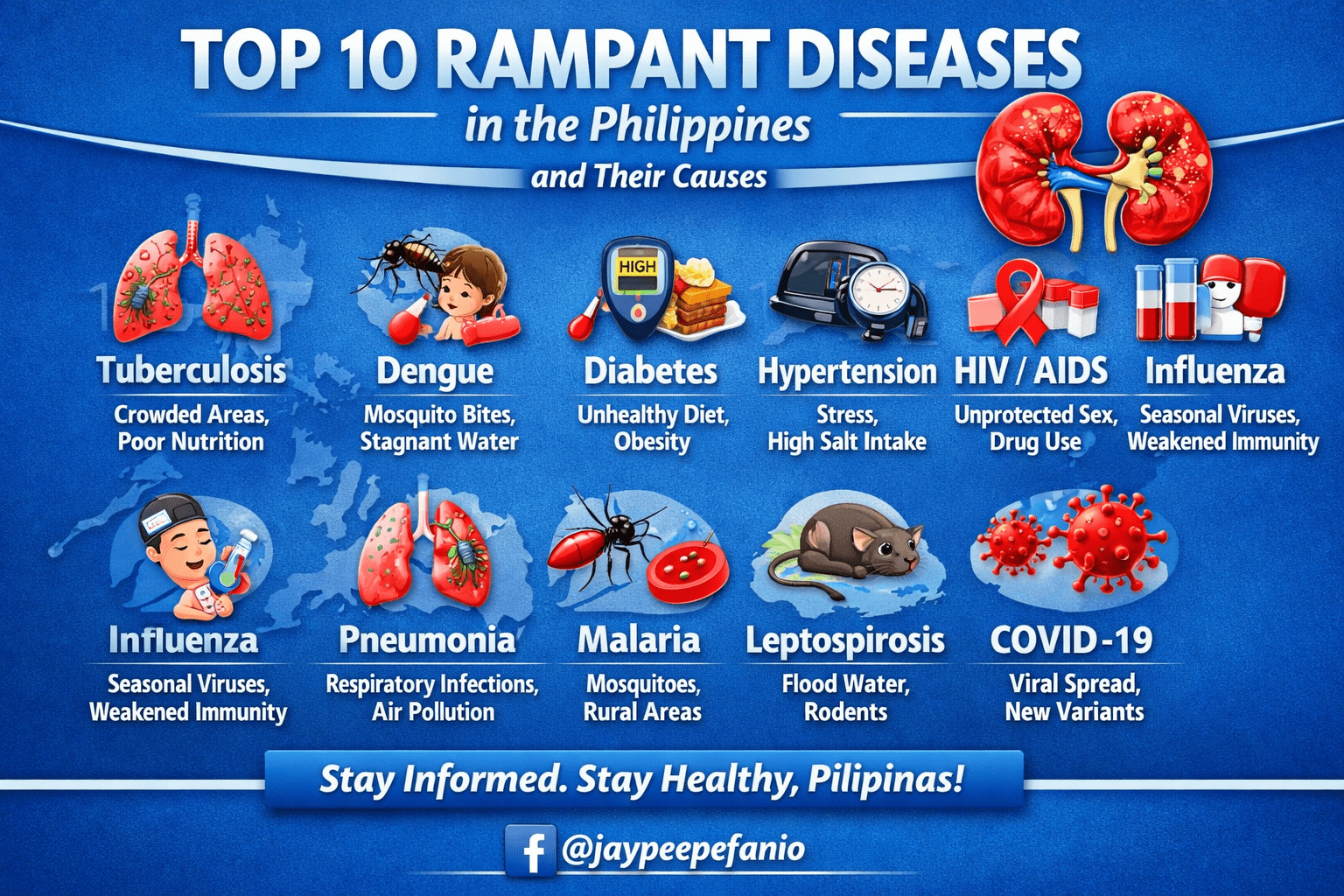
Top 10 Rampant Diseases in the Philippines and Their Causes
Top 10 Rampant Diseases in the Philippines
The Philippines continues to face a mix of infectious and lifestyle-related health challenges. With a tropical climate, crowded urban areas, and varying access to healthcare, several illnesses remain widespread across the country. Understanding the top 10 rampant diseases in the Philippines can help families, communities, and individuals take better steps toward prevention and early treatment.
1. Hypertension
Hypertension, or high blood pressure, is one of the most common health problems in the Philippines. It often shows no obvious symptoms, which is why many people do not know they have it until complications appear.
If left untreated, hypertension can lead to:
- Stroke
- Heart disease
- Kidney failure
A healthy diet, regular exercise, less salt intake, and routine checkups are important in managing blood pressure.
2. Diabetes
Diabetes is another major public health concern. It affects how the body processes blood sugar and can lead to serious complications if not controlled.
Common warning signs include:
- Frequent urination
- Excessive thirst
- Unexplained weight loss
- Fatigue
Poor diet, lack of physical activity, and family history are major risk factors. Early diagnosis and lifestyle changes can make a big difference.
3. Tuberculosis
Tuberculosis, or TB, remains a persistent disease in the Philippines. It is caused by bacteria that mainly attack the lungs, though other parts of the body can also be affected.
TB spreads through the air when an infected person coughs or sneezes. Symptoms often include:
- Persistent cough
- Chest pain
- Fever
- Night sweats
- Weight loss
Because TB is contagious, early testing and complete treatment are essential to stop its spread.
4. Dengue Fever
Dengue fever is a mosquito-borne disease that becomes more common during the rainy season. The Philippines, with its warm and humid climate, provides ideal conditions for mosquitoes to breed.
Symptoms may include:
- High fever
- Headache
- Pain behind the eyes
- Joint and muscle pain
- Skin rashes
Severe dengue can be life-threatening. Preventing mosquito bites and removing stagnant water around homes are key defenses.
5. Pneumonia
Pneumonia is a lung infection that affects many Filipinos, especially children, older adults, and people with weaker immune systems. It can be caused by bacteria, viruses, or fungi.
Signs of pneumonia often include:
- Cough with phlegm
- Fever
- Difficulty breathing
- Chest pain
Vaccination, good hygiene, and prompt medical care can help prevent serious complications.
6. Acute Respiratory Infections
Acute respiratory infections, including colds, flu, and more serious respiratory illnesses, are among the most frequently reported diseases in the country. These infections spread easily, especially in schools, workplaces, and crowded public areas.
Children are particularly vulnerable. Symptoms may include:
- Cough
- Runny nose
- Sore throat
- Fever
- Body weakness
Practicing handwashing, covering coughs, and staying home when sick can help limit transmission.
7. Heart Disease
Heart disease remains a leading cause of death in the Philippines. It includes conditions that affect the heart’s ability to pump blood properly, such as coronary artery disease and heart failure.
Risk factors include:
- Smoking
- High blood pressure
- High cholesterol
- Obesity
- Stress
- Poor diet
Many heart-related problems can be delayed or prevented through healthy habits and regular medical screening.
8. Kidney Disease
Kidney disease has become more common in recent years, often linked to diabetes and hypertension. The kidneys filter waste from the blood, so when they stop working well, toxins build up in the body.
Possible warning signs include:
- Swelling in the feet or face
- Changes in urination
- Fatigue
- Loss of appetite
Kidney disease often progresses silently, so regular checkups are important for those at risk.
9. Influenza
Influenza, or the flu, is more than just a common cold. It can cause severe illness, especially in young children, the elderly, pregnant women, and people with chronic conditions.
Flu symptoms usually appear suddenly and may include:
- Fever
- Cough
- Sore throat
- Muscle aches
- Chills
Annual vaccination, rest, hydration, and proper hygiene remain the best ways to reduce flu-related illness.
10. Leptospirosis
Leptospirosis is a bacterial disease that often spreads after floods or contact with water contaminated by animal urine. In the Philippines, it becomes a major concern during typhoon season.
Symptoms can range from mild to severe and may include:
- Fever
- Headache
- Muscle pain
- Vomiting
- Yellowing of the skin or eyes
People who work or travel in flooded areas should wear protective footwear and avoid wading in dirty water whenever possible.
Why These Diseases Remain a Concern
Several factors contribute to the continued spread of these illnesses in the Philippines:
- Dense urban populations
- Limited access to healthcare in some areas
- Seasonal floods and tropical weather
- Poor sanitation in some communities
- Unhealthy diets and sedentary lifestyles
Many of these diseases are preventable or manageable with early action. Awareness, regular health checks, and healthier daily habits can reduce risks significantly.
Staying Protected
While these diseases are common, many of them can be controlled through practical steps:
- Get vaccinated when available
- Practice proper hand hygiene
- Keep living spaces clean and mosquito-free
- Eat a balanced diet
- Exercise regularly
- Seek medical attention early
- Follow prescribed treatments fully
Final Thoughts
The top 10 rampant diseases in the Philippines reflect both infectious threats and long-term lifestyle conditions. By recognising the risks and taking preventive action, individuals and communities can help reduce the burden of disease. Health awareness is the first step toward a safer and healthier future for everyone.