WHAT IS FIBER OPTIC CABLE?
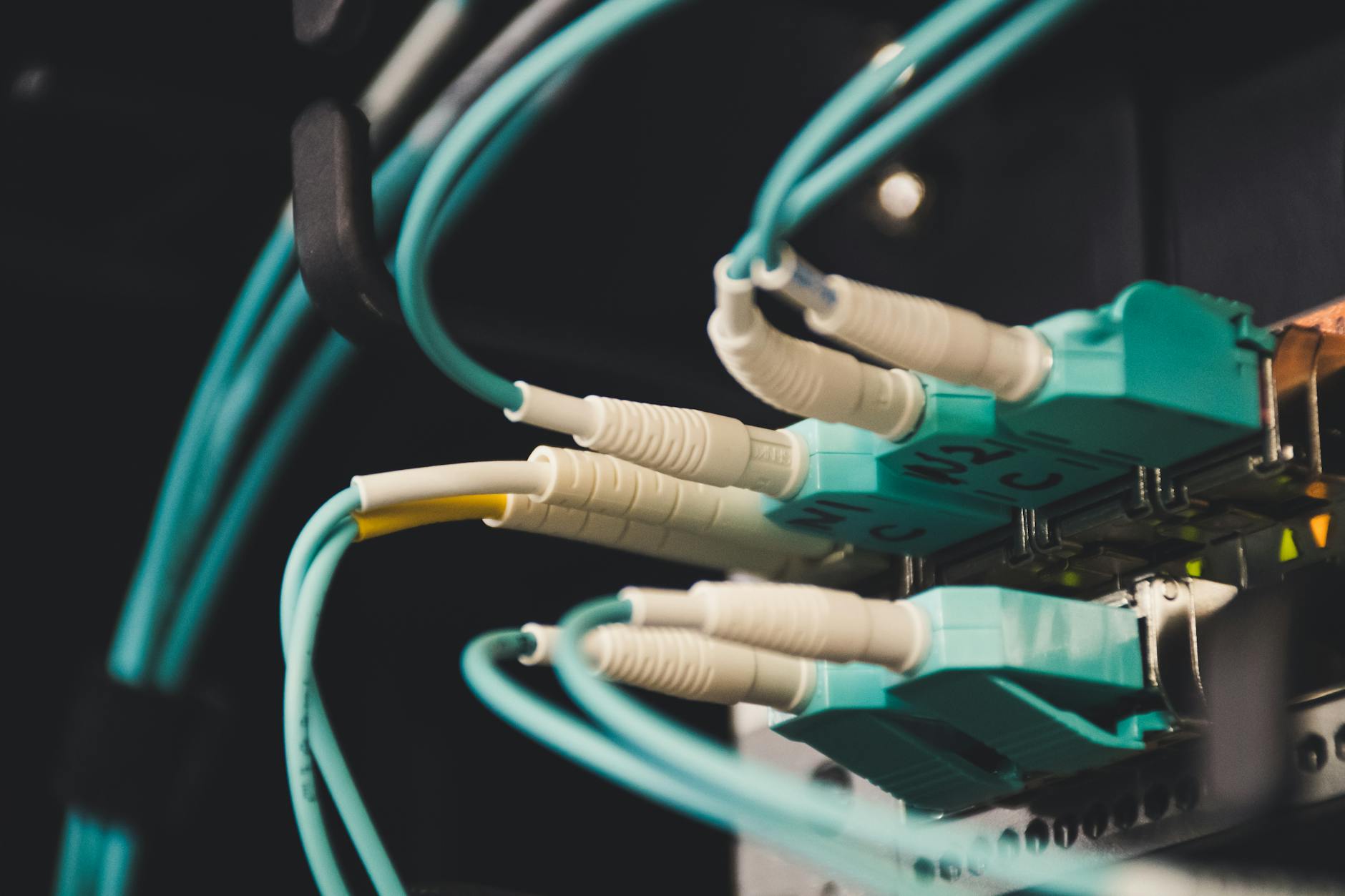
A fiber optic cable is a high-speed data transmission medium that uses light to carry information through strands of glass or plastic fibers. It’s faster and more reliable than traditional copper cables, especially over long distances.
Key Features of Fiber Optic Cables
- Light-based transmission: Instead of electrical signals, fiber optics use pulses of light to transmit data, which allows for extremely fast speeds.
- Core and cladding structure: Each fiber consists of a central core surrounded by a cladding layer. The difference in refractive index between these layers ensures light stays within the core via total internal reflection.
- Protective layers: Fibers are coated with plastic and bundled into protective tubes to withstand environmental conditions and physical stress.
Advantages Over Traditional Cables
- Higher bandwidth: Fiber optics can carry significantly more data than copper cables.
- Longer transmission distances: Signals degrade less over distance, making them ideal for long-haul communication.
- Immunity to electromagnetic interference: Since they use light, fiber cables aren’t affected by electrical noise.
Common Uses
- Internet and telecommunications: Backbone of high-speed internet infrastructure.
- Medical imaging: Used in endoscopy and other diagnostic tools.
- Military and aerospace: Secure and efficient communication systems.
- Industrial networking: Reliable data transmission in harsh environments.
Types of Fiber Optic Cables
- Single-mode fiber (SMF): Designed for long-distance communication with a narrow core that allows one light mode to pass.
- Multi-mode fiber (MMF): Has a wider core and supports multiple light paths, suitable for shorter distances like within buildings.
If you’re considering fiber optics for your business or tech setup, it’s a game-changer for speed, reliability, and future-proofing your network.