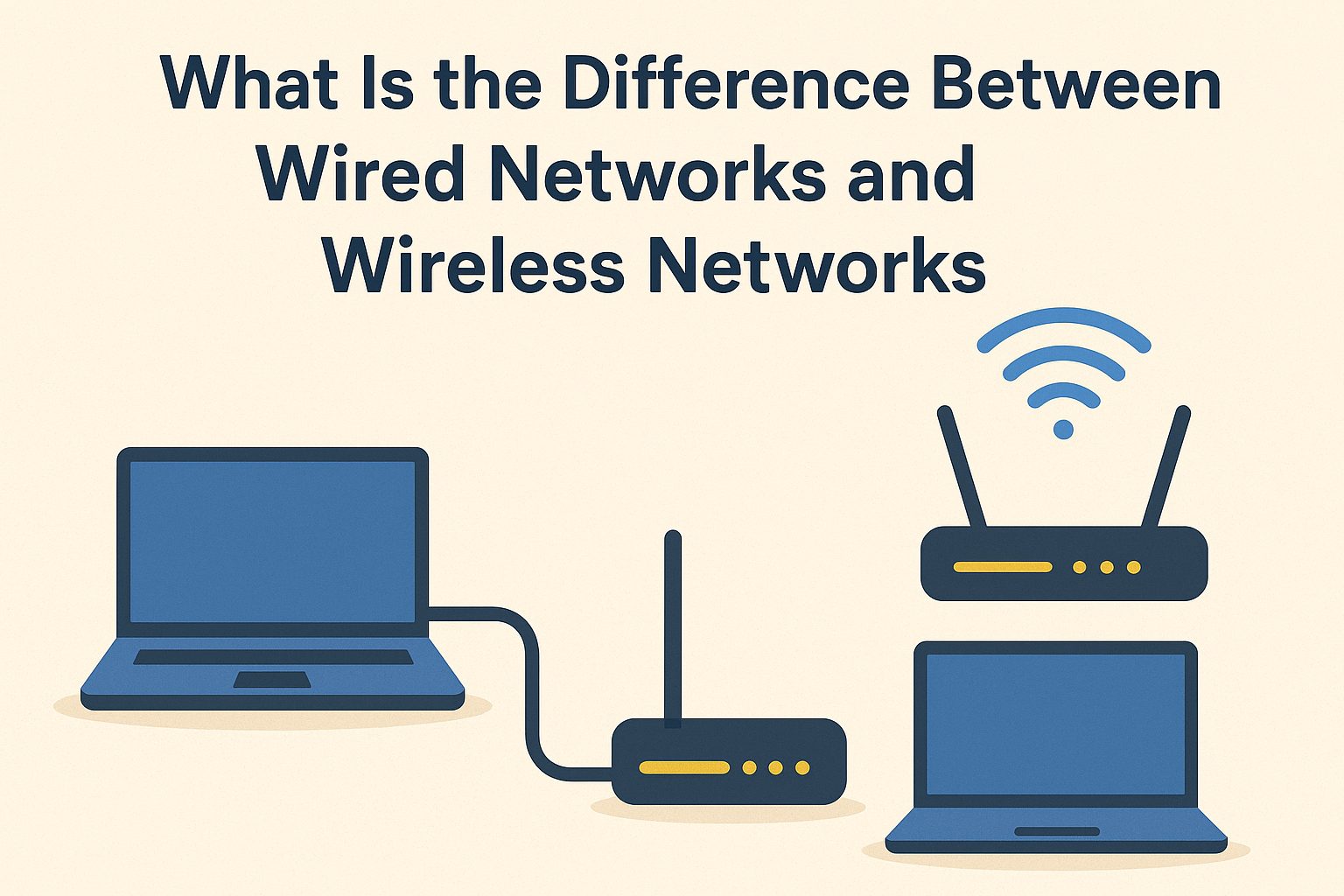
WHAT IS WIRED NETWORKS AND WIRELESS NETWORKS?
Wired vs Wireless Networks: Which One Fits Your Needs Best?
Wired networks use physical cables for stable, high-speed connections, while wireless networks rely on radio waves for flexible, cable-free access. Each has its strengths depending on your setup and priorities.
What Is a Wired Network?
A wired network connects devices using physical cables, such as Ethernet. It’s the traditional setup for homes, offices, and data centres.
Advantages:
- Faster speeds and lower latency
- More secure due to limited access points
- Stable connection with minimal interference
Disadvantages:
- Requires cable installation and management
- Limited mobility — devices must stay near ports
What Is a Wireless Network?
A wireless network uses radio waves (Wi-Fi) to connect devices without cables. It’s ideal for mobile devices and flexible setups.
Advantages:
- High mobility — connect from anywhere within range
- Easy installation — no cables needed
- Supports multiple devices simultaneously
Disadvantages:
- Slower speeds and higher latency than wired
- More vulnerable to interference and hacking
- Signal strength depends on distance and obstacles
QUICK COMPARISON TABLE
| FEATURE | WIRED NETWORK | WIRELESS NETWORK |
|---|---|---|
| Speed | Faster, more consistent | Slower, variable |
| Security | More secure | Less secure |
| Mobility | Limited | High |
| Installation | Requires cables | Cable-free |
| Reliability | Very stable | Can be affected by interference |
| Cost | Higher setup cost | Lower setup cost |