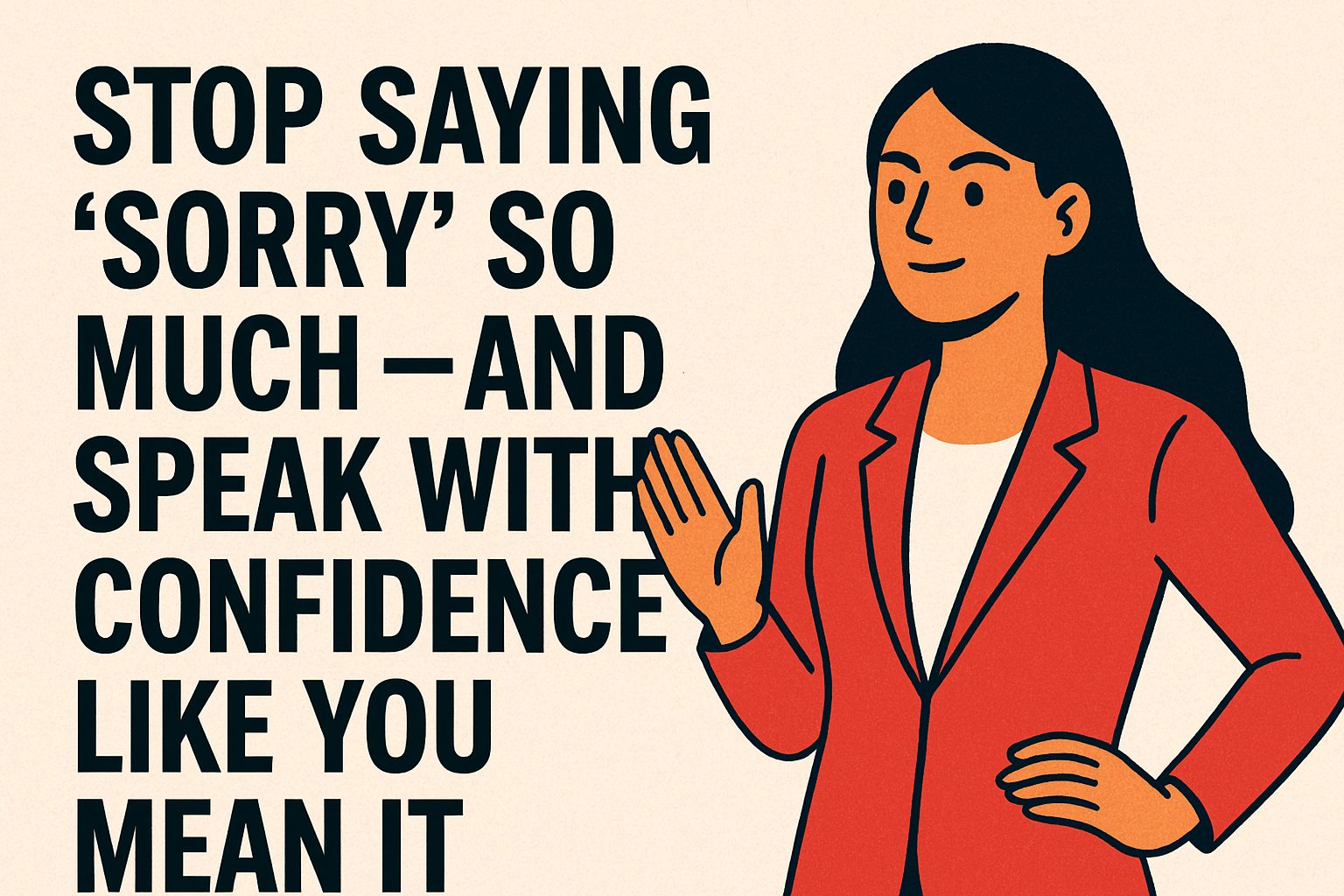
Stop Saying “Sorry” So Much — And Speak With Confidence Like You Mean It
We’ve all done it. You bump into someone and instinctively say, “Sorry.” You speak up in a meeting and preface your point with, “Sorry, but…” You send an email and begin with, “Sorry for the delay,” even if it’s only been a few hours. But here’s the truth: over-apologising can quietly chip away at your confidence and credibility — and it’s time to break the habit.
The Problem With Over-Apologizing
Saying “sorry” when it’s not truly warranted can make you appear less confident, less assertive, and even less competent. It subtly communicates that you believe you’re an inconvenience or that your presence is something to be excused. In professional settings, especially, this can undermine your authority and dilute the impact of your words.
Here are a few common examples:
- “Sorry, can I ask a question?” → Try: “I have a question.”
- “Sorry for the long message.” → Try: “Thanks for taking the time to read this.”
- “Sorry, I just wanted to check in…” → Try: “I’m following up on…”
These small shifts can make a big difference in how you’re perceived — and how you perceive yourself.
Why We Do It
Over-apologizing often stems from a desire to be polite, avoid conflict, or soften our presence — especially for women, people of color, and those in marginalized communities who’ve been socially conditioned to minimize themselves. It can also be a coping mechanism for imposter syndrome or anxiety.
But politeness doesn’t require self-erasure. You can be kind and direct. You can be respectful and assertive. You can be confident without being arrogant.
Reframe Your Language
Here’s how to start replacing unnecessary apologies with empowering alternatives:
| INSTEAD OF SAYING… | TRY SAYING… |
|---|---|
| Sorry I’m late. | Thanks for waiting. |
| Sorry to bother you. | Do you have a moment? |
| Sorry, I don’t understand. | Can you clarify that for me? |
| Sorry, I just think. | I believe… or I’d like to add… |
These swaps aren’t about being robotic or overly formal — they’re about owning your space and your voice.
Practice Makes Powerful
Breaking the “sorry” habit takes awareness and intention. Here are a few tips to help you shift:
- Track your apologies: Keep a journal or use a notes app to jot down when and why you say “sorry.” Patterns will emerge.
- Pause before you speak: Ask yourself, “Is an apology essential here?”
- Role-play with a friend or mentor: Practice rephrasing your go-to apologies in a safe space.
- Focus on clarity, not cushioning: Your ideas deserve to be heard without a disclaimer.
Confidence Is a Muscle
Confidence isn’t about never feeling doubt — it’s about choosing to speak up anyway. Every time you replace an unnecessary “sorry” with a clear, confident statement, you’re reinforcing your self-worth and setting a powerful example for others.
So next time you catch yourself about to apologize for simply existing, pause. Breathe. And say what you mean — like you mean it.
You’ve got this.