
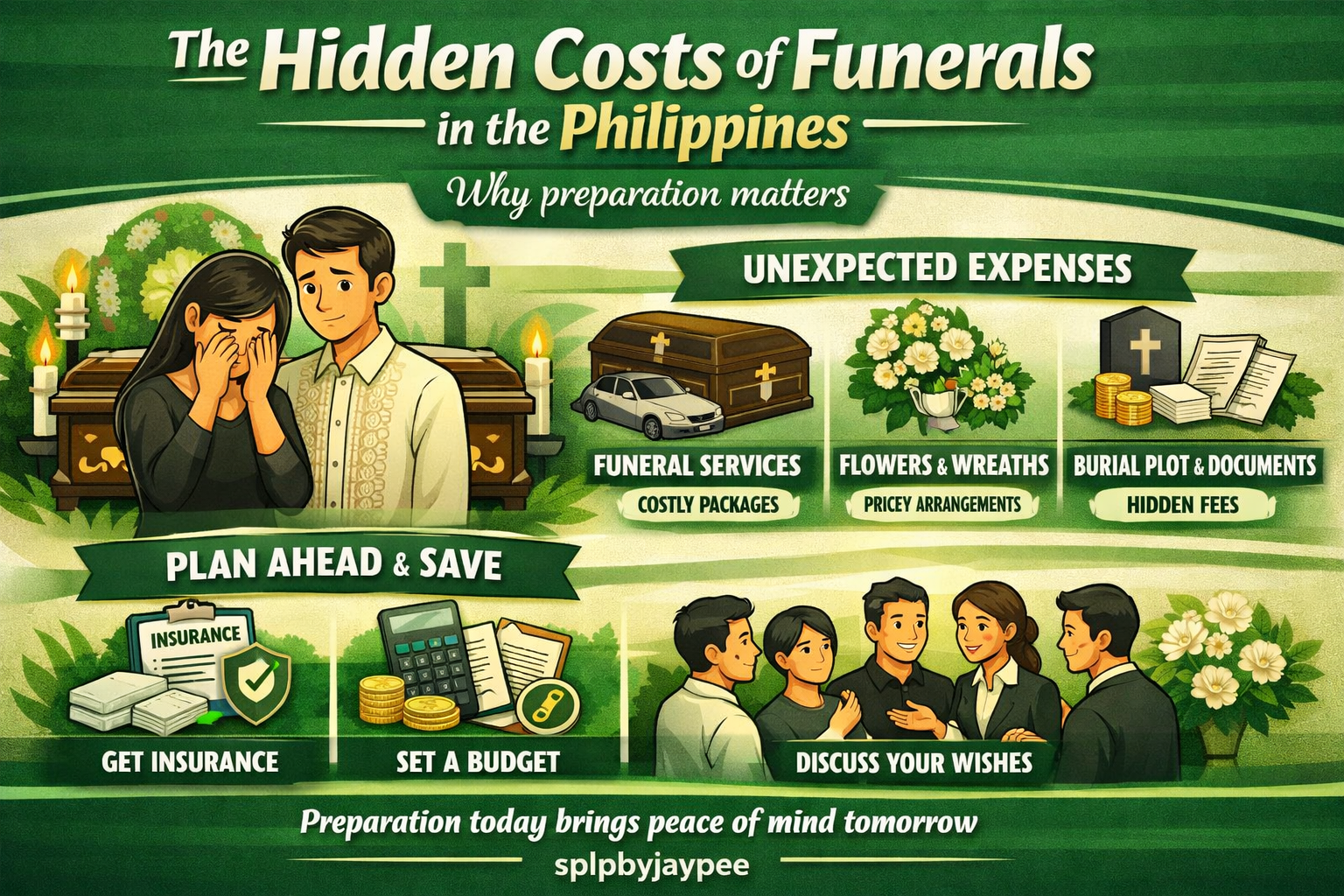
The Hidden Costs of Funerals in the Philippines: Why Preparation Matters
A funeral is never easy. It arrives during one of the most emotional moments a family can face, and decisions often need to be made quickly. In the Philippines, where family ties are strong and traditions are deeply valued, funerals are usually handled with great care and respect.
But beyond the grief, there is another reality many families discover too late: funerals can be expensive. The hidden costs of funerals in the Philippines can quickly add up, turning an already painful time into a financial burden. This is why preparation matters more than many people realize.
Why Funeral Costs Are Often Higher Than Expected
Many people assume funeral expenses only include the casket, embalming, and burial. In reality, the total can be much higher once all the small but necessary expenses are included.
Families may need to pay for:
- Funeral home services
- Embalming and body preparation
- Casket or urn
- Viewing or wake arrangements
- Transportation of the body
- Burial plot or cremation fees
- Church or chapel services
- Printed memorial materials
- Food and hospitality for visitors
Each item may seem manageable on its own, but together they can create a significant financial strain.
The Common Hidden Costs Families Overlook
1. Hospital and Death Certificate Expenses
Before a funeral can proceed, families often need official documents such as a death certificate and related medical paperwork. In some cases, there may also be unpaid hospital bills or fees for releasing the body.
These costs are easy to miss during the first few hours after death, when attention is focused on urgent arrangements.
2. Transportation Fees
Moving the body from a hospital, home, or province to the funeral parlor can be costly. If the family wants the deceased brought back to their hometown, transport expenses may rise even more.
This is especially common in the Philippines, where many families prefer to hold services in the province for traditional and practical reasons.
3. Wake and Viewing Expenses
A wake is an important part of Filipino culture, often lasting several days. During this period, families are expected to provide space, seating, lighting, and sometimes refreshments for visitors.
Some hidden costs include:
- Electricity use
- Tent or venue rental
- Chairs and tables
- Food and drinks for guests
- Candles, flowers, and decorations
Even simple gatherings can become costly when held over multiple days.
4. Burial Plot or Cremation Fees
A burial plot is one of the largest funeral expenses. Cemetery fees vary depending on location, size, and whether the plot is permanent or temporary.
Cremation may seem more affordable, but it also comes with costs such as:
- Crematorium fees
- Urn purchase
- Columbarium niche rental
- Memorial service arrangements
Families sometimes choose based on immediate budget without realizing the full long-term expense.
5. Repatriation and Special Requests
If the deceased worked abroad or passed away far from home, repatriation can be very expensive. The process may involve legal documents, embassy coordination, and international transport.
Special requests can also increase costs, such as:
- Custom caskets
- Large floral arrangements
- Professional photo or video coverage
- Extra religious services
- Printed memorial souvenirs
These are often added during an emotional time, when families want to honor their loved one as much as possible.
Why These Costs Create Real Stress
Funerals are usually planned in a hurry, often within a matter of days. That leaves little time to compare prices or save money. Families may rely on loans, borrowing from relatives, or using emergency funds.
This pressure can create several problems:
- Emotional decisions lead to overspending
- Family members disagree on budget
- Debt continues long after the funeral ends
- Savings meant for daily needs are depleted
In many households, one funeral can affect finances for months or even years.
The Value of Preparing Ahead
Preparation is not about being pessimistic. It is about protecting your family from unnecessary stress during a difficult time. Knowing the hidden costs of funerals in the Philippines helps families make wiser decisions before an emergency happens.
Ways to Prepare Financially
- Start an emergency fund for end-of-life expenses
- Discuss funeral preferences with family members
- Compare funeral home packages in advance
- Check burial, cremation, and memorial options early
- Keep important documents organized and accessible
- Consider funeral insurance or pre-need plans
Even small steps can make a big difference later.
Planning With Care and Dignity
Preparing for funeral expenses is ultimately an act of love. It gives your family clarity when emotions are overwhelming. It also allows them to focus on grieving, remembering, and supporting one another instead of worrying about money.
In the Philippines, where honoring the dead is deeply meaningful, thoughtful preparation can help preserve both dignity and peace of mind. The goal is not to remove the sorrow of loss, but to prevent financial hardship from becoming part of it.
Final Thoughts
Funerals are never just about one day or one service. They involve a series of expenses that many families do not anticipate. From documents and transportation to burial plots and wake costs, the hidden costs of funerals in the Philippines can be surprisingly high.
That is why preparation matters. Planning ahead can reduce stress, protect savings, and help families make decisions with more confidence. In times of loss, that kind of readiness is a gift that truly matters.